
International Workshop Radical/Printed Manifestos

From 8 to 11 April 2025, EAD Tarragona and EAD Reus hosted Radical/Printed Manifestos, an international workshop developed jointly with ESA Avignon. The activity brought together 6 students from Avignon and 11 students from EAD Tarragona and EAD Reus, accompanied by their teacher Oussama Mahdi, for a shared working experience focused on writing, typography, graphic production and printing techniques.
The proposal started from a very specific idea: exploring how words and ideas can acquire new meanings when they are materialised through printed form. The workshop invited participants to experiment freely with language, typography and visual form, working particularly with printed and multi-page formats. The aim was to develop individual and collective manifestos in the form of zines, understanding printing not simply as a reproduction technique, but as an active part of the creative process.
The exchange with the students from Avignon added a particularly significant dimension to the project. During four intensive days of work, the students shared spaces, processes and tools with peers from another school and another educational and cultural context. Oussama Mahdi accompanied the ESA Avignon group throughout the experience, also helping to strengthen the contact between the two schools.
The programme was structured around six phases, moving from research and context through to production and final presentation: context and references; from concept to visual form through writing; typography as an expressive tool; fast screen printing; layout and serial production; and, finally, the exhibition. In this way, the workshop combined reflection, experimentation and hands-on production within a single process.
The first day was devoted to introducing the project and the working context. Following the initial presentation by Dani Uzquiano, David Salas gave a historical overview of the artistic manifesto, followed by a session exploring strategies for writing manifestos. The day concluded with a lecture by Àlvar Calvet, focusing on the transition from concept to artistic formalisation.

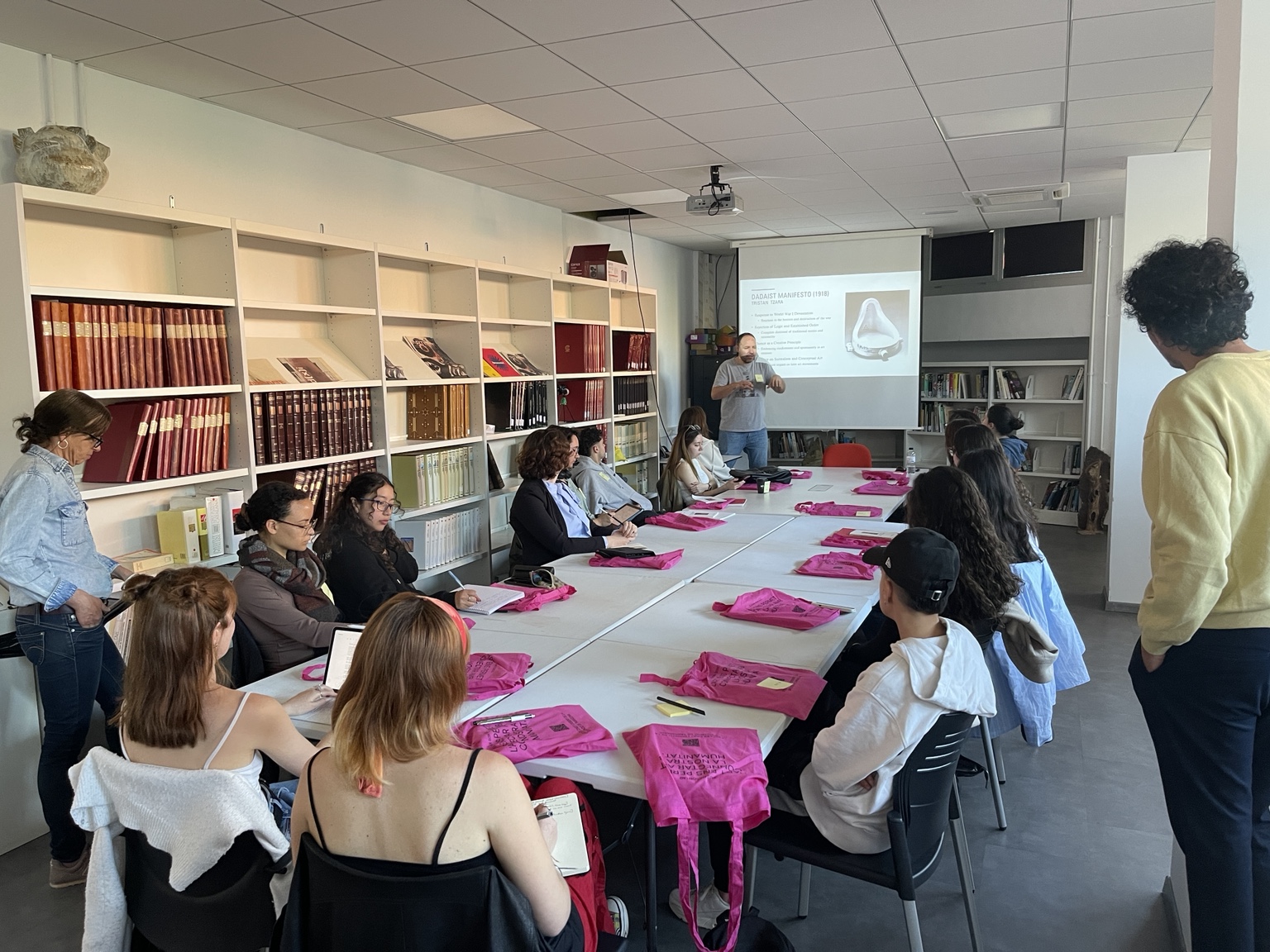
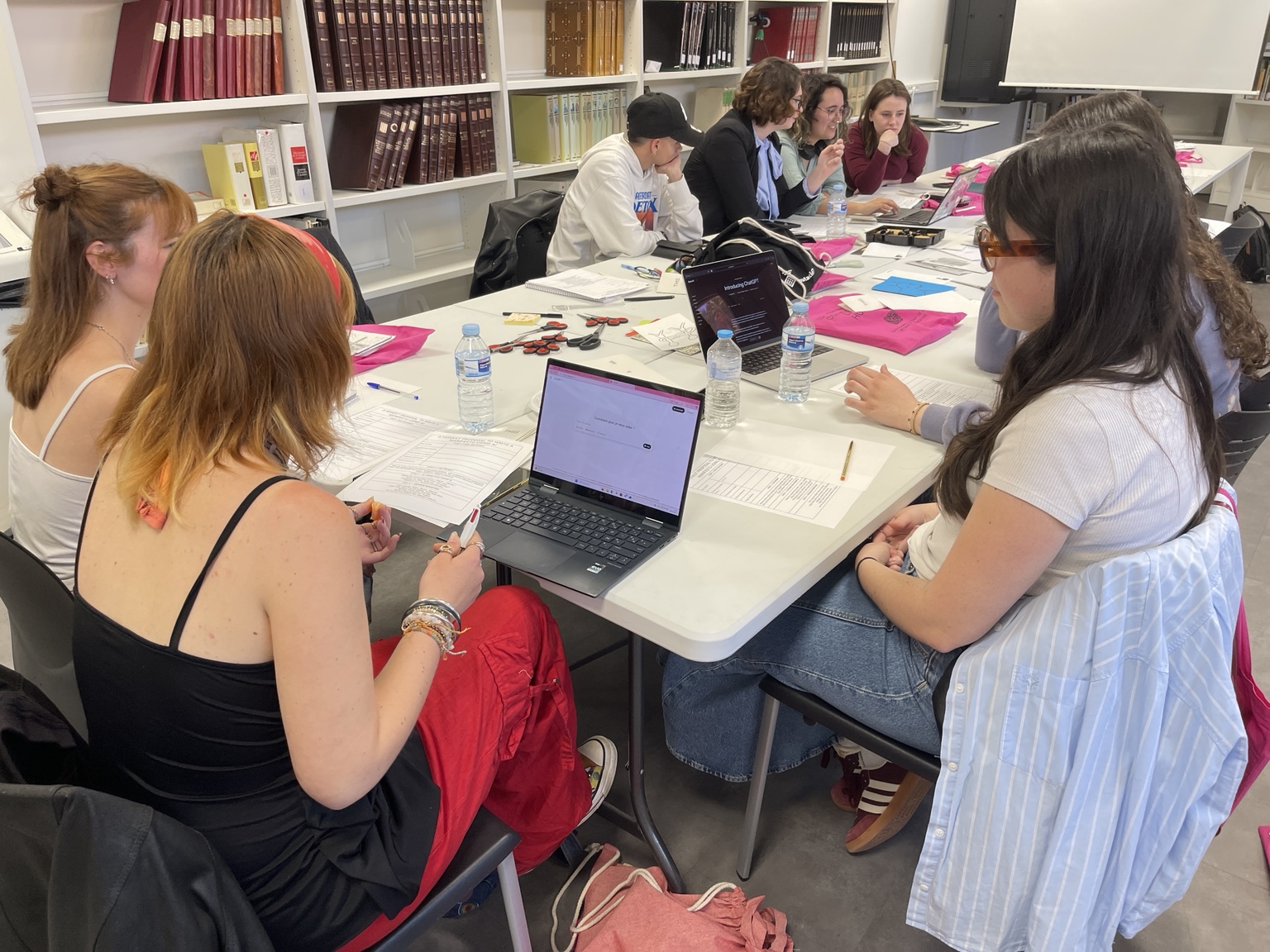


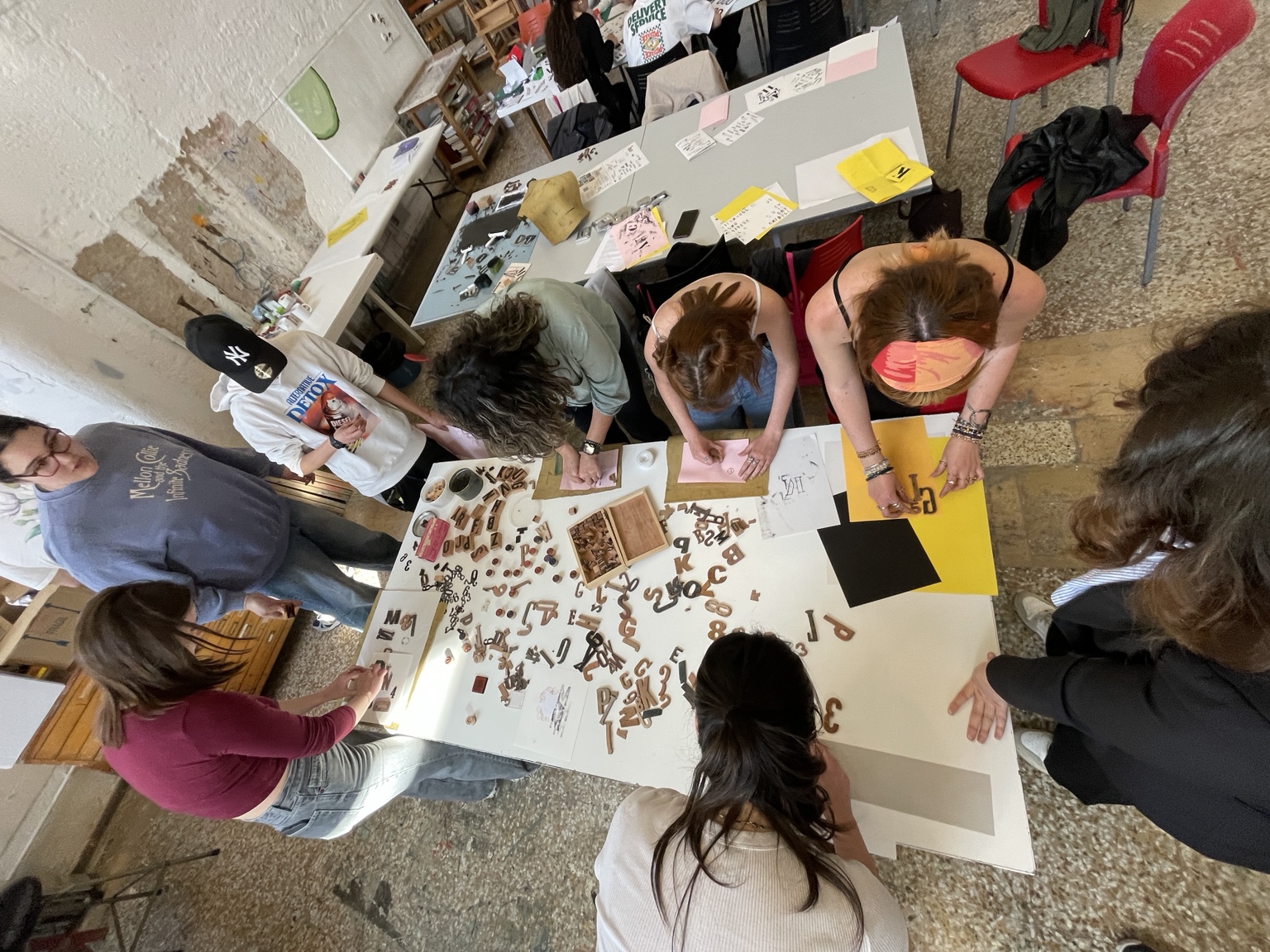
The second day focused particularly on practice. Núria Rubio worked on typography as an expressive tool, while Núria Rion introduced the students to exposure-free screen printing. Manual printing techniques and Risograph printing were also explored, combining these tools with group work.
The workshop photographs show precisely this experimental dimension of the project: screen-printing frames, inks, papers, templates, proofs, cut-outs and compositions that changed as the work progressed. Experimentation with materials was accompanied by a continuous process of decision-making, testing and modification.




The workshop also incorporated an exploration of Tarragona’s artistic and cultural heritage. The students visited the Museum of Modern Art of Tarragona and its library, and the programme also included a visit to the Praetorium, the Roman Amphitheatre and the city walls. These activities allowed the students to move beyond the school’s working spaces and connect artistic practice with other forms of cultural production, preservation, documentation and transmission.


The final day took place at EAD Reus, where the work moved from producing the pieces to presenting them publicly. After travelling from Tarragona, the participants worked on preparing the exhibition and selecting and organising the materials produced during the previous days.
The resulting works took many different forms: manifestos, zines, prints, typographic compositions and other pieces produced during the workshop. Some materials were developed individually, while others emerged from collaborative work, incorporating the tests and accidents inherent to manual printing processes. The pieces were arranged within a structure made of wooden modules, allowing different formats and ways of displaying the work to coexist.


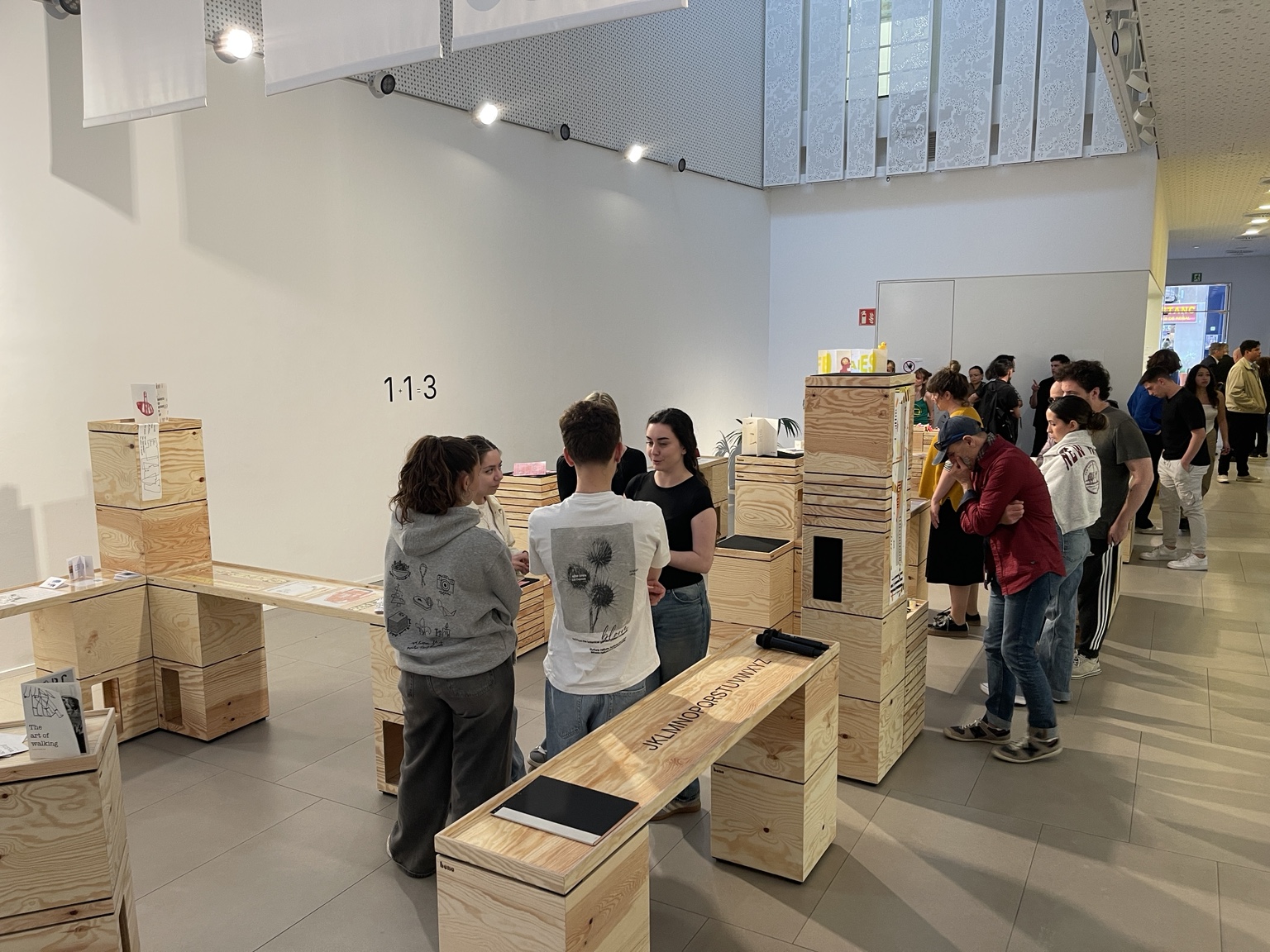


One of the most significant aspects of the workshop was precisely the opportunity to share this process among students from different backgrounds. The 6 students from ESA Avignon worked for four days alongside the 11 students from EAD Tarragona and EAD Reus, in a programme combining working sessions, lectures, printing practices, visits and exhibition preparation. Oussama Mahdi’s participation completed ESA Avignon’s involvement in the project.
This workshop made it possible to develop a joint project between EAD Tarragona, EAD Reus and ESA Avignon without separating international exchange from academic activity. For several days, the students shared the schools’ spaces, tools and working processes, and ultimately presented the outcome of the experience together at EAD Reus.